Sachin Ramesh Tendulkar is an Indian cricketer widely considered to be the
greatest batsman of all time, after Don Bradman.
He is the leading run-scorer and century maker in Test
and one-day international cricket.
He is the first player to score a double century in Men's ODI cricket. He also holds the world
record for playing highest number of Test
and ODI matches.
There
are no apparent weaknesses in Tendulkar's game. He can score all around the
wicket, off both front foot and back, can tune his technique to suit every
condition, temper his game to suit every situation, and has made runs in all
parts of the world in all conditions.
Some
of his finest performances have come against Australia, the overwhelmingly
dominant team of his era. His century as a 19-year-old on a lightning-fast
pitch at the WACA is considered one of the best innings ever to have been
played in Australia. A few years later he received the ultimate compliment from
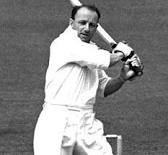
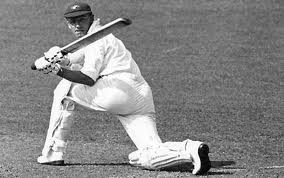
the ultimate batsman: Don Bradman confided to his wife that Tendulkar reminded
him of himself.
Blessed
with the keenest of cricket minds, and armed with a loathing for losing,
Tendulkar set about doing what it took to become one of the best batsmen in the
world. His greatness was established early: he was only 16 when he made his
Test debut. He was hit on the mouth by Waqar Younis but continued to bat, in a
blood-soaked shirt. His first Test hundred, a match-saving one at Old Trafford,
came when he was 17, and he had 16 Test hundreds before he turned 25. In 2000
he became the first batsman to have scored 50 international hundreds, in 2008
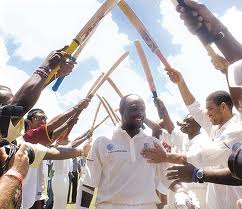
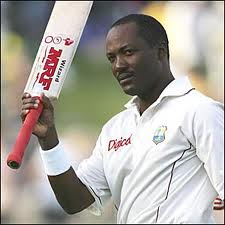
he passed Brian Lara as the leading Test run-scorer, and in the years after, he
went past 13,000 Test runs 30,000 international runs, and 50 Test hundreds.
In 2002, just 12
years into his career, Wisden ranked him the second greatest
Test batsman of all time, behind Donald
Bradman, and the second greatest one-day-international (ODI) batsman
of all time, behind Viv Richards. Tendulkar was a part of the 2011 Cricket World Cup winning Indian team in the later part of his
career, his first such win in six World Cup appearances for India. He was also
the recipient of Player of the Tournament award of ICC World Cup,
2003 held in South Africa.
He won the 2010 Sir Garfield Sobers Trophy for cricketer
of the year at the ICC awards. He has been recommended for the receipt of the Bharat Ratna
award, in fact it has been speculated that the criteria for the award of the Bharat Ratna
was changed to allow him receive the award.[11][12]
He is also a member of Rajya Sabha of Parliament of India.
 Tendulkar is the
only cricketer to accomplish the feat of scoring a hundred centuries in
international cricket which includes 49 ODI and 51 Test centuries. He is also the
only player to score fifty centuries in Test cricket, and the first to score
fifty centuries in all international cricket combined. On 17 October 2008, when
he surpassed Brian Lara's record for the most runs scored in
Test cricket, he also became the first batsman to score 12,000, 13,000, 14,000
and 15,000 runs in that form of the game, having also been the third batsman
and first Indian to pass 11,000 runs in Test cricket. He was also the first
player to score 10,000 runs in one-day internationals, and also the first
player to cross every subsequent 1000-run mark that has been crossed in ODI
cricket history. In the fourth Test of the Border-Gavaskar Trophy against
Australia, Tendulkar surpassed Australia's Allan Border
to become the player to cross the 50-run mark the most number of times in Test cricket
history, and also the second ever player to score 11 Test centuries against
Australia, tying with Sir Jack Hobbs of England more than 70 years
previously. Tendulkar passed 30,000 runs in international cricket on 20
November 2009. On 24 February 2010, Tendulkar became the first man to score a
double century (200*) in an ODI against South Africa. On 8 November 2011,
Tendulkar became the first batsman to score 15,000 runs in Test Cricket. After
a two-month break he is likely to return to test arena with the series against
New Zealand commencing in late August 2012.
Tendulkar is the
only cricketer to accomplish the feat of scoring a hundred centuries in
international cricket which includes 49 ODI and 51 Test centuries. He is also the
only player to score fifty centuries in Test cricket, and the first to score
fifty centuries in all international cricket combined. On 17 October 2008, when
he surpassed Brian Lara's record for the most runs scored in
Test cricket, he also became the first batsman to score 12,000, 13,000, 14,000
and 15,000 runs in that form of the game, having also been the third batsman
and first Indian to pass 11,000 runs in Test cricket. He was also the first
player to score 10,000 runs in one-day internationals, and also the first
player to cross every subsequent 1000-run mark that has been crossed in ODI
cricket history. In the fourth Test of the Border-Gavaskar Trophy against
Australia, Tendulkar surpassed Australia's Allan Border
to become the player to cross the 50-run mark the most number of times in Test cricket
history, and also the second ever player to score 11 Test centuries against
Australia, tying with Sir Jack Hobbs of England more than 70 years
previously. Tendulkar passed 30,000 runs in international cricket on 20
November 2009. On 24 February 2010, Tendulkar became the first man to score a
double century (200*) in an ODI against South Africa. On 8 November 2011,
Tendulkar became the first batsman to score 15,000 runs in Test Cricket. After
a two-month break he is likely to return to test arena with the series against
New Zealand commencing in late August 2012.
He currently holds
the record for most hundreds in both Tests and ODIs - remarkable, considering
he didn't score his first ODI hundred till his 79th match. Incredibly, he
retains a divine enthusiasm for the game, and he seems to be untouched by age:
at 36 years and 306 days he broke a 40-year-old barrier by scoring the first
double-century in one-day cricket. In 2012, when just one month short of his
39th birthday, he became the first player to score 100 international centuries,
which like Bradman's batting average, could be a mark that lasts for ever.
 Tendulkar has been
honoured with the Padma Vibhushan award, India's second highest
civilian award, and the Rajiv Gandhi Khel Ratna award, India's
highest sporting honour. Tendulkar became the first sportsperson and the first
person without an aviation background to be awarded the honorary rank of Group Captain
by the Indian Air Force. He has received honorary
doctorates from University of Mysore and Rajiv Gandhi University of Health
Sciences Sachin holds 12th rank in ICC Player Rankings for Test batsmen as of
August 2012. On 1 August 2012, Sachin Tendulkar was nominated for the ICC
People's Choice award for the third time.
Tendulkar has been
honoured with the Padma Vibhushan award, India's second highest
civilian award, and the Rajiv Gandhi Khel Ratna award, India's
highest sporting honour. Tendulkar became the first sportsperson and the first
person without an aviation background to be awarded the honorary rank of Group Captain
by the Indian Air Force. He has received honorary
doctorates from University of Mysore and Rajiv Gandhi University of Health
Sciences Sachin holds 12th rank in ICC Player Rankings for Test batsmen as of
August 2012. On 1 August 2012, Sachin Tendulkar was nominated for the ICC
People's Choice award for the third time.